
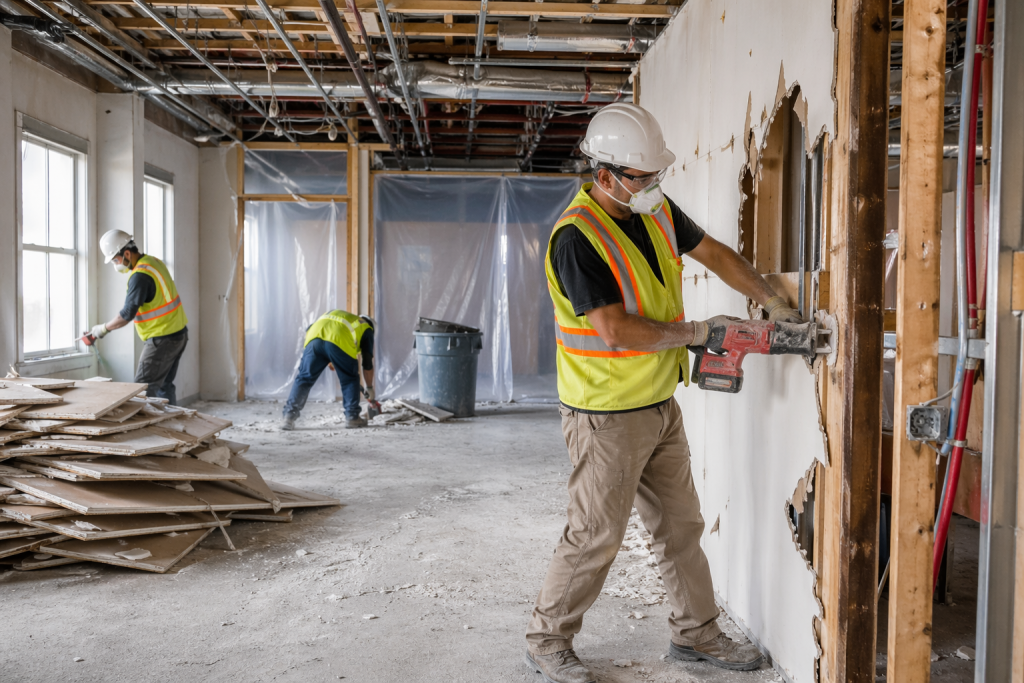
Safe interior demolition is more than swinging a sledgehammer and hauling debris. It is a precise, planned process that protects people, property, and the surrounding environment. At Top of the Line Services LTD, every interior demolition project begins with a detailed assessment and ends with a clean, hazard-free space. Understanding what happens behind the scenes helps property owners make smarter decisions and choose the right team for the job.
Why Safe Interior Demolition Demands a Structured Approach
Many people assume demolition is a simple teardown. In reality, safe interior demolition requires careful coordination at every stage. Workers must identify load-bearing walls, locate utility lines, and assess materials for hazardous content before a single tool touches the structure.
Rushing this process creates serious risks. Structural collapse, asbestos exposure, and gas line damage are real consequences of poorly managed interior work. A professional team follows a strict sequence to eliminate these dangers before they escalate.
Planning also reduces waste. When crews know exactly what they are removing and how, they can separate recyclable materials from debris more efficiently. This matters for both cost and environmental responsibility.
What Happens Before the Work Begins
Pre-demolition planning is where the real work starts. A qualified crew conducts a thorough site inspection. They document the layout, identify utility shutoffs, and flag anything that requires special handling.
Hazardous material testing is a critical step. Older buildings often contain asbestos in insulation, tiles, and drywall compounds. They may also have lead-based paint on walls and trim. Testing confirms the presence or absence of these materials before any demolition begins.
If hazardous materials are found, the remediation team removes them safely before proceeding. This is non-negotiable. Disturbing asbestos or lead without proper containment puts workers and occupants at serious risk.
Utility disconnection follows. Electricity, gas, and water lines must be properly shut off and capped. A licensed contractor coordinates with utility providers when required. Only after these steps are complete does the physical demolition begin.
The Tools and Techniques Used in Interior Demolition
Professional interior demolition relies on more than brute force. Crews use a combination of hand tools, power equipment, and specialized technology to remove materials cleanly and efficiently.
Selective demolition is common in renovation projects. This approach removes only specific elements — a partition wall, a dropped ceiling, a concrete floor — while leaving the rest of the structure intact. It requires precision cutting and careful extraction.
Demolition service Calgary professionals use tools like reciprocating saws, angle grinders, and jackhammers for different material types. Each tool serves a specific purpose. Using the wrong one damages adjacent structures and creates additional cleanup.
Dust suppression is another important technique. Demolition generates fine particles that spread quickly through a building. Crews use water misting systems, negative air pressure containment, and HEPA filtration to control airborne dust throughout the project.
Waste Management and Site Cleanup After Demolition
Debris removal is a major component of any interior demolition project. Responsible contractors separate materials on-site. Wood, metal, drywall, and concrete go to different disposal or recycling streams.
Hazardous waste requires separate handling entirely. Asbestos-containing materials, for example, must be bagged, labeled, and transported to approved disposal facilities. This process follows strict regulations at the municipal and provincial level.
Some projects uncover unexpected contamination during demolition. Mould behind walls, rodent infestations, and sewage damage are all possible discoveries. When this happens, the team pivots quickly. Biohazard cleanup Calgary services address these situations professionally, using containment and decontamination protocols to restore safety.
After debris removal, the crew performs a detailed final clean. Surfaces are swept, vacuumed, and inspected. The goal is to hand over a space that is clean, safe, and ready for the next phase of work — whether that is new construction, renovation, or restoration.
How Insulation Removal Fits Into the Demolition Process
Insulation removal is a frequent part of interior demolition, particularly in older buildings and attic spaces. Degraded or contaminated insulation must come out before new materials go in. This step also addresses energy efficiency issues caused by damaged or poorly installed insulation.
Attic insulation removal Calgary is a task that requires specialized vacuuming equipment and careful containment. Blown-in insulation, in particular, creates significant airborne debris when disturbed. Professionals use industrial-grade vacuums and sealed containment bags to manage this effectively.
Removing old insulation also provides an opportunity to inspect the space underneath. Hidden moisture damage, pest activity, and structural concerns often surface during this process. Addressing them before installing new insulation prevents bigger problems later.
The Importance of Hiring the Right Interior Demolition Team
Not every contractor approaches safe interior demolition with the same level of care. Property owners should look for teams with documented safety protocols, proper licensing, and experience with hazardous materials.
Top of the Line Services LTD brings a comprehensive approach to every project. The team handles everything from initial assessment through final cleanup. Clients do not need to coordinate multiple contractors for different phases. One team manages the full scope.
A company committed to professional standards also carries appropriate insurance. This protects property owners from liability in the event of an accident or unexpected damage. It is a basic requirement that serious contractors meet without exception.
Dry ice blasting Calgary is one example of an advanced cleaning method used during post-demolition restoration. This technique removes residue, mould, and surface contamination from structural components without adding moisture or chemical agents. It is especially effective on wood framing, concrete, and mechanical equipment.
What Sets Professional Interior Demolition Apart
The difference between amateur and professional demolition comes down to process. Professionals document every step. They follow safety regulations, communicate with clients at each phase, and adapt when unexpected conditions arise.
Top of the Line Services LTD maintains this standard on every project. From small residential renovations to large commercial teardowns, the approach stays consistent. Safety, efficiency, and clean results define the work.
Property owners benefit from this consistency. They get accurate timelines, clear communication, and a final result that meets building code requirements. They also avoid the costly mistakes that come from cutting corners on planning or safety.
Top of the Line Restoration professionals understand that interior demolition is the foundation of any successful renovation or rebuild. When this phase is done right, everything that follows goes more smoothly.
Bringing It All Together
Safe interior demolition is a multi-step process that demands planning, expertise, and the right equipment. It begins with a detailed site assessment and ends with a clean, documented handover. Every phase in between requires trained professionals who follow proven protocols.
Top of the Line Services LTD delivers exactly this kind of service. Whether the project involves a single room or an entire building interior, the team brings the same disciplined approach to every job. Safe interior demolition done properly protects your investment, your people, and your timeline.
If you are planning a renovation, rebuild, or commercial interior project, start with a team that treats safety as the foundation of everything they do.
Frequently Asked Questions
1. What does safe interior demolition involve? Safe interior demolition involves site assessment, hazardous material testing, utility disconnection, selective or full material removal, and thorough cleanup. Professionals follow strict protocols at every stage to protect workers and the property.
2. How long does an interior demolition project typically take? Timeline depends on the size of the space, the materials involved, and whether hazardous materials are present. A single-room teardown may take one to two days. Larger commercial projects can take several weeks. Your contractor will provide a detailed schedule during the planning phase.
3. Do I need permits for interior demolition in Calgary? In most cases, yes. Permits are required when structural elements are being removed or when work affects plumbing, electrical, or gas systems. A qualified contractor handles the permitting process and ensures all work meets local building code requirements.
4. What happens if hazardous materials are found during demolition? Work stops in the affected area. A certified remediation team assesses and removes the hazardous material following regulatory protocols. This includes proper containment, removal, labeling, and disposal. Work resumes only after clearance testing confirms the area is safe.
5. Can interior demolition be done while a building is occupied? In some cases, yes, but it requires additional precautions. Containment barriers, dust control systems, and restricted access zones protect occupants. In most situations, temporary relocation is the safest option during active demolition phases. Your contractor will advise based on the specific project conditions.