
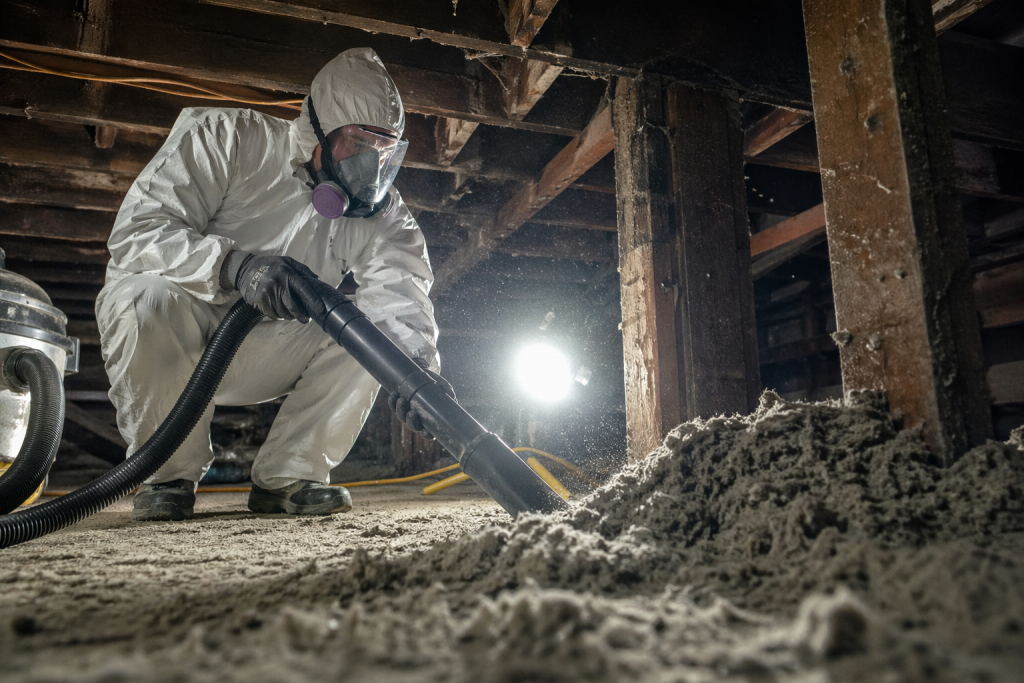
At Top of the Line Services LTD, we understand that some of the most dangerous threats to a building are the ones you cannot see. Hidden contamination — whether from mould, biohazards, chemical residue, or decades of accumulated debris — quietly compromises air quality, structural integrity, and human health. Unseen contamination cleanup is not a simple wipe-down job. It demands a methodical, multi-step process carried out by trained professionals using the right equipment. If you suspect your property holds hidden hazards, this guide explains exactly how restoration professionals bring a space back to a safe, livable standard.
Why Unseen Contamination Is More Dangerous Than Visible Damage
Visible damage is easy to act on. A broken window, a flooded floor, a cracked wall — these prompt immediate attention. Unseen contamination works differently. It hides inside wall cavities, beneath insulation, above ceiling tiles, and in mechanical systems. By the time symptoms appear — persistent odours, respiratory issues, or unexplained illness — the problem has often been present and spreading for months.
Common sources of hidden contamination include:
- Mould colonies growing behind drywall after a slow leak
- Biohazardous material absorbed into porous surfaces
- Chemical or industrial residue embedded in concrete or wood
- Pest waste and decomposition within insulation layers
- Smoke and soot particles trapped in structural materials
Each of these requires a different remediation approach. That is why professionals assess first, act second, and verify third.
Step 1: Professional Assessment and Containment
Every effective unseen contamination cleanup begins with a thorough assessment. Technicians use air quality testing, moisture meters, thermal imaging, and visual inspection to map the full scope of contamination. This step determines what is present, where it has spread, and what removal methods are appropriate.
Once the assessment is complete, containment begins. Affected zones are sealed off with negative air pressure barriers. This prevents contaminants from migrating to clean areas during the remediation process. Ventilation systems are isolated. HEPA air filtration units are deployed. Workers enter in appropriate personal protective equipment.
Skipping or rushing this step is how contamination spreads further. Proper containment is not optional — it is foundational.
Step 2: Targeted Removal Using the Right Method
With containment in place, removal begins. The method depends entirely on the type and location of the contamination.
Dry ice blasting is one of the most effective tools for industrial and structural cleaning. It removes mould, soot, grease, and chemical residue from surfaces without water, without abrasion, and without secondary waste streams. The dry ice sublimates on contact, meaning the only material left behind is the contaminant itself. For surfaces inside machinery, along structural beams, or in confined spaces, dry ice blasting in Calgary delivers results that conventional cleaning cannot match.
Contaminated insulation removal is another critical step in many residential and commercial cases. Insulation absorbs moisture, mould spores, pest waste, and airborne chemicals over time. Once compromised, it cannot be cleaned — it must be removed entirely. Professionals performing attic insulation removal in Calgary extract the material safely, dispose of it properly, and prepare the space for fresh installation.
In cases involving serious biological hazards — trauma scenes, unattended deaths, sewage intrusion, or infectious material — biohazard cleanup in Calgary requires certified technicians who follow strict protocols for handling, packaging, and disposing of regulated waste. This is not a task for general contractors or untrained personnel.
When contamination has penetrated a structure beyond remediation — where materials cannot be cleaned and must be removed entirely — demolition services in Calgary allow remediation teams to strip affected areas down to their clean substrate. Selective demolition removes only what is necessary, preserving the surrounding structure while eliminating the source.
Step 3: Surface Treatment and Antimicrobial Application
After physical removal, surfaces require treatment. Raw substrates exposed during remediation are vulnerable to recontamination. Antimicrobial coatings, encapsulants, and sealers are applied based on the surface material and the type of contamination addressed.
This step also includes HEPA vacuuming of all surfaces within the containment zone and air scrubbing to reduce airborne particle counts. The goal is to bring the environment to a verified clean standard before containment is removed.
Step 4: Post-Remediation Verification
Professional unseen contamination cleanup does not end when the work crew leaves. It ends when testing confirms the space meets safety standards.
Post-remediation verification involves independent air quality sampling, surface swab testing, and moisture readings. Results are compared against baseline or clearance benchmarks. Only when testing confirms compliance is the containment removed and the space cleared for re-occupancy or reconstruction.
This verification step protects building owners, occupants, and contractors alike. It creates a documented record that work was completed properly.
Step 5: Restoration and Prevention Planning
Once clearance is confirmed, the space is ready for restoration. This may involve new insulation installation, drywall replacement, painting, or mechanical system cleaning. Top of the Line Services LTD works alongside restoration contractors to ensure the cleaned space is rebuilt to a standard that prevents future contamination.
Prevention planning is part of this final stage. Technicians identify the root cause — the leak, the ventilation failure, the pest entry point — and make recommendations to address it. Remediation without addressing the source is a temporary fix. A lasting solution requires eliminating the conditions that allowed contamination to develop in the first place.
When to Call a Professional Immediately
Some situations demand immediate professional response. Do not delay contact if you notice:
- A persistent musty or chemical odour with no identifiable source
- Discolouration, staining, or soft spots on walls or ceilings after any water event
- Unexplained respiratory symptoms in building occupants
- Evidence of pest infestation within wall or ceiling cavities
- Any situation involving blood, sewage, or suspected biohazardous material
In these cases, time matters. Contamination spreads. Early intervention reduces damage, reduces cost, and reduces health risk.
Choosing the Right Remediation Partner
Not every contractor is equipped for unseen contamination cleanup. This work requires specialized training, certified equipment, proper waste disposal credentials, and documented protocols. When evaluating a remediation company, ask about their assessment process, their containment procedures, their verification methods, and their disposal documentation.
Top of the Line Services LTD brings industrial-grade capability to every project. From initial assessment through post-remediation verification, every step follows a documented process designed to protect people and property. Explore the full range of professional restoration services available to residential and commercial clients across the region.
The process that restores safety after unseen contamination is not a single action. It is a disciplined sequence of assessment, containment, removal, treatment, verification, and prevention. Every step serves a purpose. Every step protects someone.
Frequently Asked Questions
1. How do I know if my property has unseen contamination? Common warning signs include unexplained odours, recurring respiratory symptoms in occupants, visible water staining, soft spots in walls or ceilings, or a history of flooding, pest activity, or aging insulation. A professional assessment using air testing and thermal imaging will confirm whether contamination is present.
2. Is unseen contamination cleanup covered by insurance? Coverage depends on your policy and the cause of contamination. Sudden events like pipe bursts are often covered. Long-term issues like mould from slow leaks may not be. Document everything and contact your insurer early. A professional remediation company can provide detailed reports to support your claim.
3. How long does the full cleanup process take? Project duration varies based on the type and extent of contamination. A straightforward mould remediation in a single room may take one to three days. A larger industrial or biohazard project can take one to two weeks. Your technician will provide a timeline after the initial assessment.
4. Can I stay in my home or building during remediation? In most cases involving active contamination — especially mould, biohazards, or chemical residue — occupants should vacate the affected area and often the entire property during active work. Your remediation team will advise based on the specific conditions present.
5. What happens if contamination comes back after remediation? Recurrence usually indicates that the source of contamination was not fully addressed. A reputable remediation company will identify and document the root cause as part of the project. If contamination returns, request a re-assessment to determine whether the original source was resolved or whether a new issue has developed.